non-domestic EPC - Bournemouth EPC Service ...

Book Your EPC

Select Date & Time

Your Reservation

{service_name}
{reservation_date} · {reservation_time}

Location

{location_name}

Clients

{reservation_capacity}

Employee

{employee_name}

Price

{reservation_price}
Your cart is empty.

Total: £0

Your Information

Required fields are followed by *.

Your Order

Payment Method

  • Make your payment directly into our bank account.

    You will receive payment details immediately after booking.

  • Pay with your debit or credit card via Stripe.

Making a reservation...

·

Tag: non-domestic EPC

Commercial EPC Site Visit Risks Exposed

Commercial EPC site visit risks are becoming a serious problem for landlords and business owners across Bournemouth, Christchurch and Poole. Many national EPC providers are cutting costs by sending domestic-only assessors to carry out commercial site visits, while having a qualified non-domestic assessor sign off the certificate later.

Although this approach might seem harmless, it creates major compliance issues. If the site visit is carried out by someone who is not qualified to assess commercial buildings, the final EPC becomes vulnerable to challenge, rejection, or non-compliance — especially during audits, refinancing, leasing, MEES checks, or legal disputes.


Why Commercial EPC Site Visit Risks Are Increasing

Cheap national EPC providers compete almost entirely on price. Because of this, more of them now outsource the physical site visit to domestic assessors. These assessors are paid very little, and they are not trained in non-domestic building fabric, HVAC systems, SBEM modelling, or zoning.

As a result, critical technical details are collected by someone not qualified to make those determinations. This is one of the fastest-growing commercial EPC site visit risks facing property owners.


How Cheap Providers Create Commercial EPC Site Visit Risks

To keep commercial EPC prices unrealistically low, some providers use a simple model:

  1. Send a domestic assessor (DEA) to gather photos and notes.
  2. Pass the data to an in-house commercial assessor.
  3. Have the qualified assessor sign the EPC.

This creates significant commercial EPC site visit risks because the domestic assessor often ends up making technical judgments they are not trained to make. These include:

  • Identifying HVAC systems
  • Classifying building use
  • Determining construction type
  • Defining zones
  • Analysing lighting systems
  • Assessing thermal elements

Every one of these is a non-domestic competency. If the data is incorrect, the EPC can become unreliable or non-compliant.


The Legal Grey Area Behind Commercial EPC Site Visit Risks

Technically, a Level 3–5 Non-Domestic Energy Assessor (NDEA) can use an assistant for simple, non-technical data collection. However, the NDEA must:

  • Supervise the process
  • Verify all data
  • Make all technical decisions
  • Ensure competence

In practice, this is rarely what happens in low-fee national EPC jobs. Domestic assessors are usually collecting far more than simple visual data. When this happens, commercial EPC site visit risks escalate dramatically because the certificate’s accuracy becomes questionable.

If challenged, a regulator or enforcement body can decide that the EPC is non-compliant, even if a qualified NDEA signed it.


The Hidden Cost of Ignoring Commercial EPC Site Visit Risks

If your EPC is ever scrutinised during a sale, lease renewal, MEES enforcement, grant application, or refinancing, and it becomes clear that the site visit was carried out by someone not qualified, the EPC may be:

  • Rejected
  • Challenged
  • Considered non-compliant
  • Declared invalid for regulatory use

This exposes property owners to:

  • Delays
  • Increased costs
  • Re-assessment fees
  • MEES penalties
  • Failed transactions
  • Potential negligence claims

These are the real commercial EPC site visit risks that cheap EPC providers don’t mention.


How to Protect Yourself From Commercial EPC Site Visit Risks

Here are the steps every landlord and business owner should take:

1. Check the assessor’s accreditation

Use the official EPC register to confirm the assessor is qualified as a Level 3, 4 or 5 non-domestic assessor. Domestic qualifications are not enough. https://www.gov.uk/find-energy-certificate

2. Ask who actually visited the site

If it wasn’t the qualified NDEA, ask why. This matters. https://www.gov.uk/energy-performance-certificate-commercial-property

3. Ask what the assistant was allowed to collect

If they say anything involving HVAC, zoning, construction, or lighting, the EPC is at risk.

4. Ask how the NDEA verified the data

If the answer is vague or unclear, that’s a red flag.

By following these steps, you can avoid the hidden commercial EPC site visit risks that lead to non-compliant certificates.


Why Using a Local NDEA Eliminates These Risks

Local, qualified, and accredited commercial assessors carry out the entire site visit themselves. This removes the chain of risk associated with subcontracted domestic assessors and ensures your commercial EPC is:

  • Accurate
  • Compliant
  • Defensible under audit
  • Safe for MEES, lenders, and solicitors
  • Reliable during sales and leases

Using a proper NDEA is the only way to avoid the increasing number of commercial EPC site visit risks created by low-cost national providers.

For a full overview, read our guide:
👉 Commercial EPCs: Why They Matter for Business Owners


Final Thoughts

Cheap fees might save money today, but bad data can cost far more later. As commercial EPC outsourcing becomes more common, so do commercial EPC site visit risks. If you want a certificate that is accurate, compliant, and safe from challenge, make sure the site visit is carried out by a qualified non-domestic assessor — not a domestic assessor on a low fee.

👉 Book a compliant Commercial EPC with a qualified local expert:
https://bournemouthepcservice.co.uk

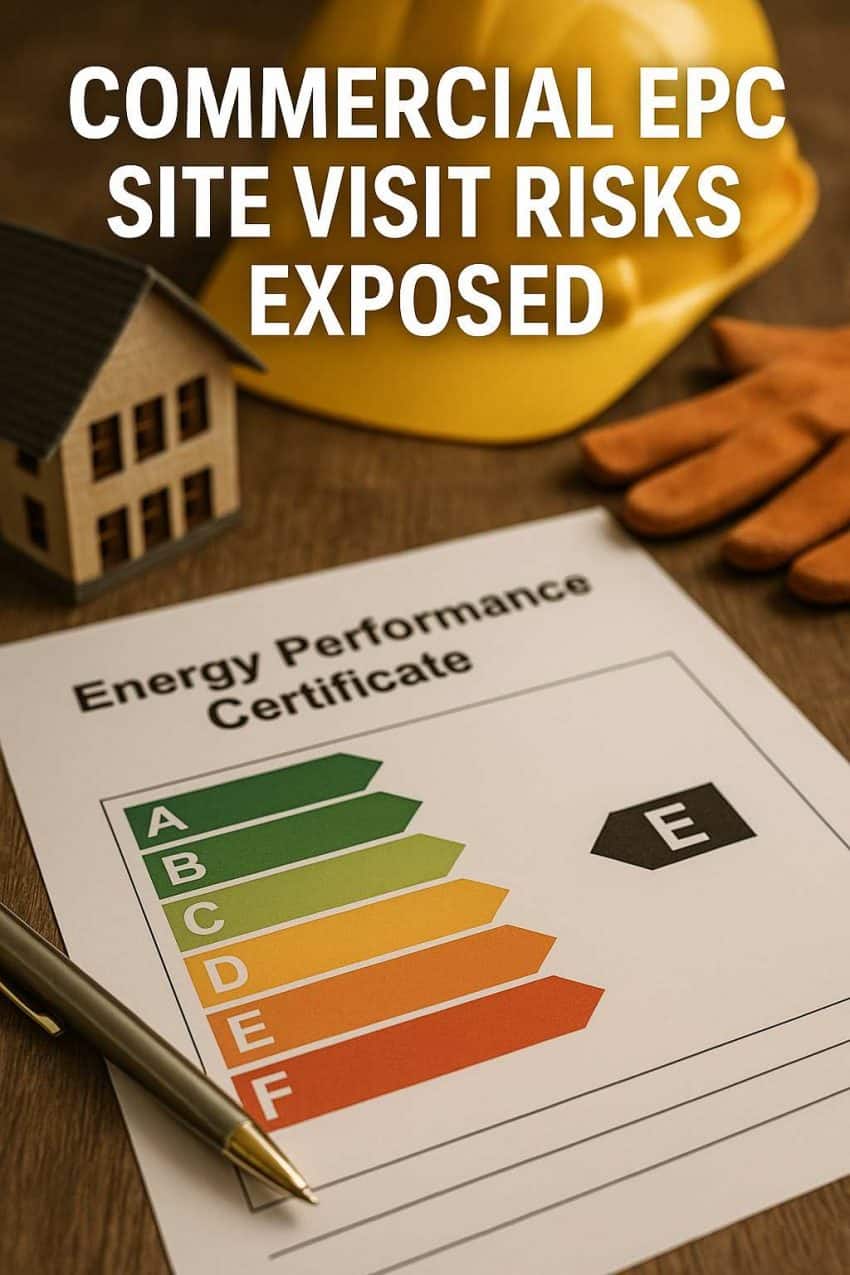
Lifelike image showing a commercial EPC certificate, safety gear, and a model building, highlighting the risks of cheap providers using unqualified assessors.

Commercial EPCs: Why They Matter for Business Owners

If you own or manage a commercial property, commercial EPCs are more than a piece of paperwork. Regulations are tightening, and tenants are asking more questions about energy efficiency. Because of this, a poor EPC rating could reduce your property value, limit rental opportunities, and increase running costs.

In this article, we’ll explain why commercial EPCs matter, what the rules are, and how businesses in Bournemouth, Christchurch and Poole (BCP) can prepare.


What Are Commercial EPCs?

Commercial EPCs measures the energy efficiency of a non-domestic property. The rating runs from A (most efficient) to G (least efficient).

Commercial EPCs apply to:

  • Offices
  • Shops
  • Warehouses
  • Restaurants and hospitality venues

They are legally required when selling, renting, or constructing a commercial building. In addition, they often influence a property’s market value and rental potential.

👉 See more about our EPC assessment services in Bournemouth.


Why Commercial EPCs Are Becoming More Important

The government has already raised the bar for rental properties by introducing a minimum EPC standard. Domestic rentals must currently reach at least band E, and there are plans to raise this further.

For commercial landlords, similar changes are likely. If your property falls below a certain band, you may not be able to let it until improvements are made. This is already the case for some non-domestic rentals.

Tenants are also part of the change. Many businesses want energy-efficient spaces because they lower costs. In addition, companies often have sustainability targets to meet. As a result, properties with strong EPC ratings are more attractive and easier to let.


The Cost of Ignoring a Poor Commercial EPC

Failing to address a poor EPC can have serious consequences. For example, you could:

  • Lose rental income if the property cannot be legally let
  • See reduced market value when trying to sell
  • Pay higher energy bills due to inefficiency
  • Face penalties for non-compliance with regulations

Older commercial properties in BCP are particularly at risk. Many pre-war shops, converted offices, and uninsulated warehouses struggle to reach acceptable standards.


How to Improve Commercial EPCs

The good news is that you can often make significant improvements without large investments. Here are some of the most effective steps:

  • Upgrade to LED lighting systems
  • Install modern HVAC systems with better efficiency
  • Add or improve roof and wall insulation
  • Use smart energy controls to manage heating and cooling
  • Replace single-glazed windows with energy-efficient glass

For SMEs, these upgrades usually provide fast payback through reduced bills.

👉 Read our guide on reducing business energy costs for more ideas.


Why Act on Commercial EPCs Now?

It may be tempting to wait until new regulations are confirmed. However, delaying action carries risks. By acting early, you can:

  • Spread improvement costs over time
  • Market your property as “future-proofed” to tenants
  • Cut your own operating expenses immediately
  • Protect your property’s long-term value

Because EPC rules are moving in one direction — towards stricter standards — preparation now avoids disruption later.


How Bournemouth EPC Service Can Help

At Bournemouth EPC Service, we specialise in both domestic and commercial EPCs. Our accredited assessors provide:

  • Accurate, compliant certificates
  • Local knowledge of BCP commercial property types
  • Practical recommendations to improve ratings
  • Clear, competitive pricing

Whether you own a shop, manage an office, or operate a larger commercial site, we’ll help you stay compliant and unlock the benefits of a stronger EPC rating.

👉 Book your commercial EPC today and give your property the edge.


Final Thoughts

Commercial EPCs are no longer just a legal requirement. They are a key factor in property value, tenant demand, and running costs.

For landlords, investors, and business owners in Bournemouth, Christchurch and Poole, the message is clear: act now to secure your property’s future.

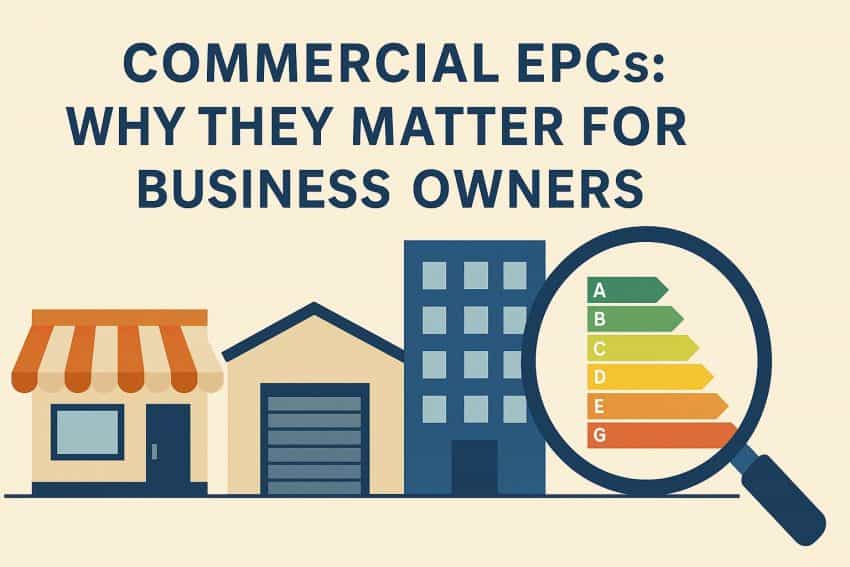
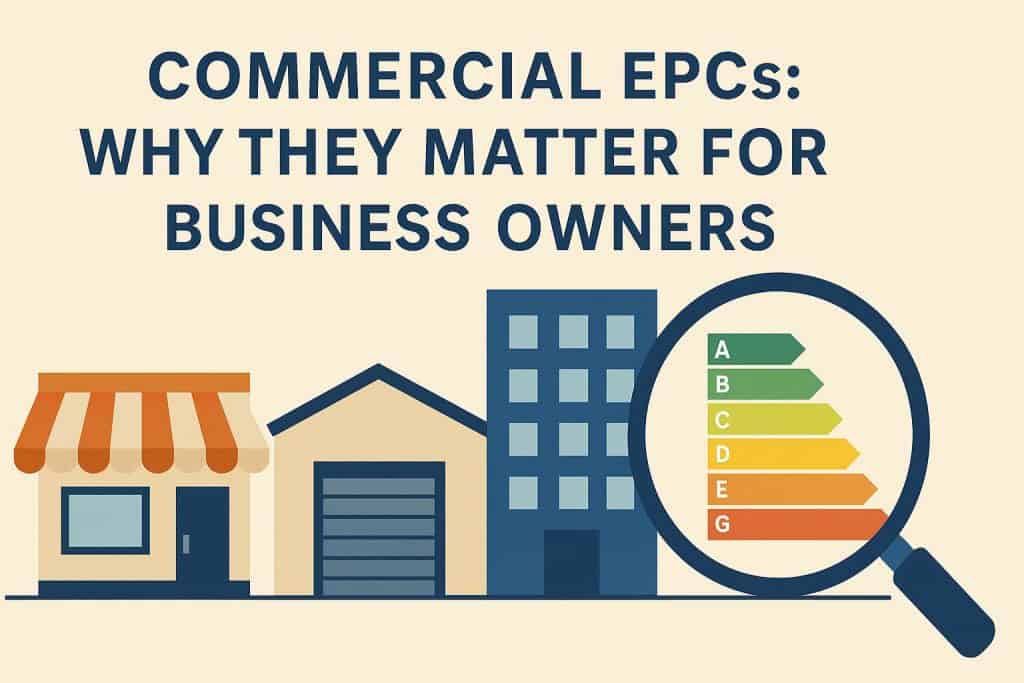
Illustration highlighting the importance of commercial EPCs, showing business buildings and an EPC chart under a magnifying glass.